Who Owns This Lead? Building an Accountable WhatsApp Enquiry Workflow
NXTAA Team
Lead Management Specialist
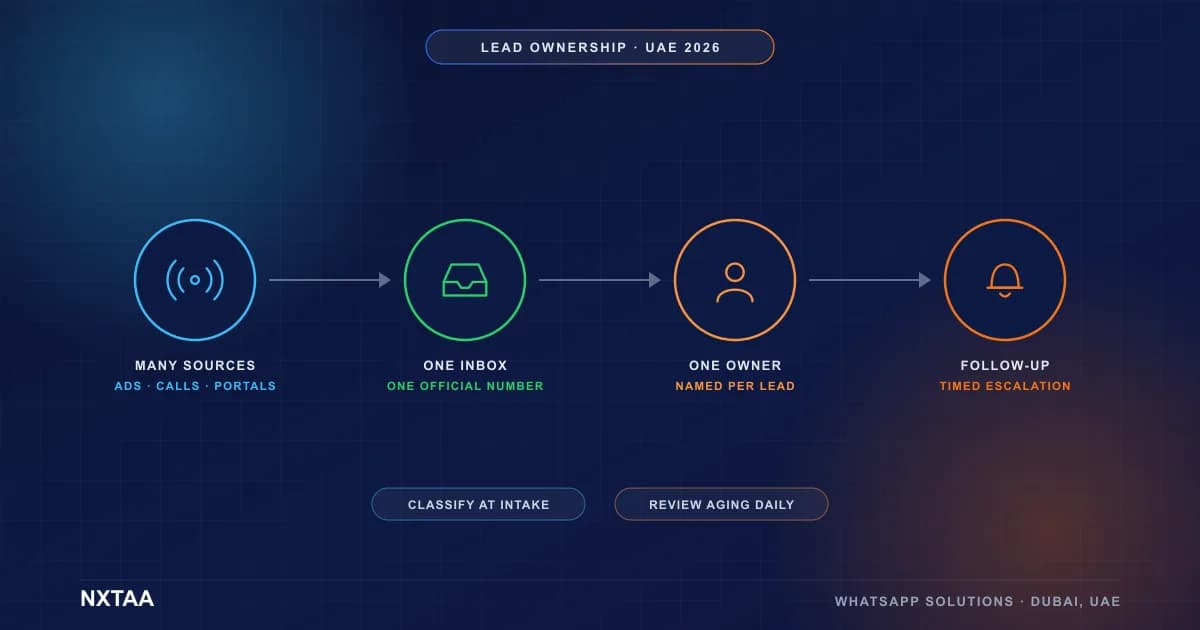
An accountable WhatsApp enquiry workflow gives every incoming lead one official number to message, a shared inbox to land in, a category, a named owner and a follow-up deadline. When leads come from ads, calls, portals and referrals at once, ownership is what keeps any of them from being forgotten.
Key Takeaways
- Leads fail at the gaps between people, not at the first message
- One official number and a shared inbox replace scattered personal phones and lost threads
- Classify each enquiry at intake so it reaches the right person with the right urgency
- Every lead needs exactly one named owner and a visible follow-up deadline
- Escalate by time, not by hope: unanswered leads move up automatically
- Review ownership and aging daily, because accountability decays quietly
The Lead Everyone Saw and Nobody Answered
Imagine a business-setup consultancy in the UAE. Enquiries arrive from everywhere: paid ads that open WhatsApp, calls to the office number that end with "send me the details on WhatsApp," portal leads, walk-ins, and referrals forwarded by existing clients. A call-centre team of eight handles the front line, with specialists behind them for licence types, visas and banking.
For a long time WhatsApp ran on personal phones. Each consultant gave out their own number. Clients saved whichever number they were handed.
One Monday, a founder messaged asking about a free-zone licence for a trading company. The message landed on a consultant's phone on a day she was on leave. Two colleagues saw the group notification and each assumed the other had picked it up. The founder waited three days, then signed with someone else.
Nobody was lazy. The process simply had no owner field.
When the management team reconstructed the week, they found more of the same: duplicate replies to the same person from two consultants, leads with no reply at all, and a manager who could not say how many enquiries were open. Looking back, the problem was not volume. It was that "who owns this?" had no answer written anywhere.
The Five Parts of an Accountable Workflow
We rebuilt the enquiry flow around five parts. Each one removes a specific way leads get lost.
1. One official number
All enquiries, from every source, go to a single business WhatsApp number running on the API. Ads open it. Staff give it out. Email signatures show it. Personal numbers stop being lead channels.
2. A shared inbox
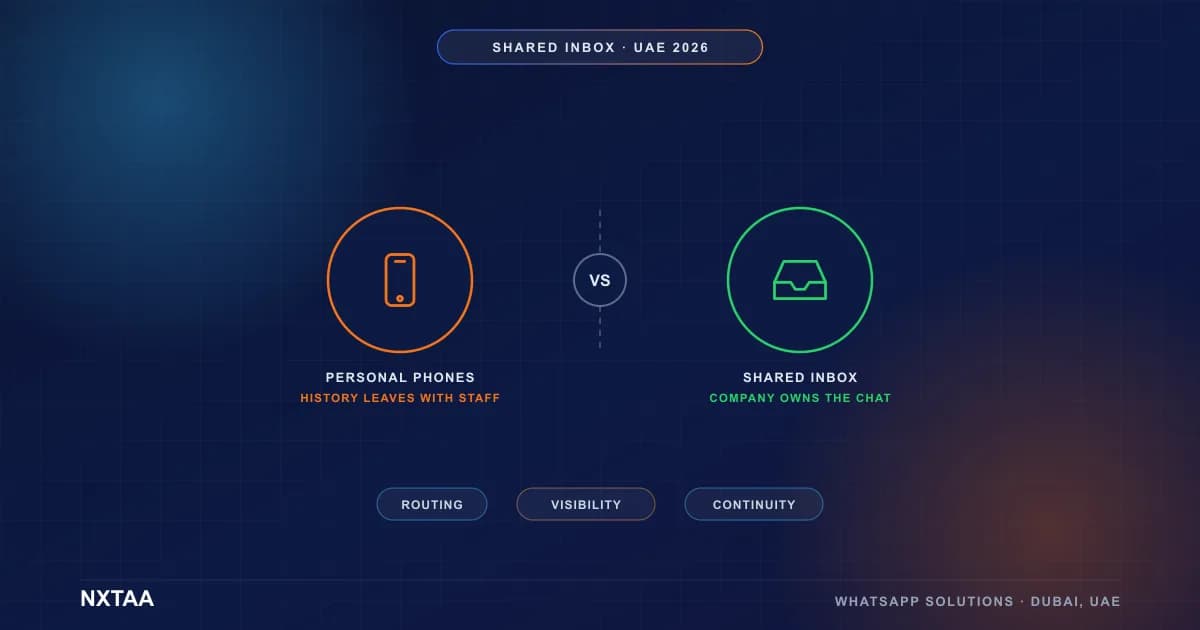
Every conversation lands in one inbox that the whole team can see. Anyone can check status. A manager can see everything open. Nothing lives only on one person's phone. We compare the two models in detail in shared team inbox vs personal WhatsApp phones.
3. Classification at intake
Not every enquiry deserves the same treatment. A short intake step, either a bot with a few buttons or an agent's tag, sorts each lead:
- Type of service: company formation, visa, banking, renewal
- Source: ad, call, portal, referral, walk-in
- Urgency: needs a reply today, this week, or exploratory
- Language: Arabic, English, other
4. Owner assignment
Every lead gets exactly one named owner, assigned by rule: round-robin within a service line, by specialty, or by the referrer's existing relationship. The owner's name sits on the conversation. Other staff can help, but the owner is accountable.
5. Follow-up and escalation rules
Every lead carries a deadline for the next action. If it passes, the system nudges the owner, then the team lead, then the manager.
How the Pieces Fit: A Matrix
Here is the simple routing matrix the consultancy used. It decides who owns what and how fast.
| Lead type | Source | Owner | First reply target | Escalate after |
|---|---|---|---|---|
| Company formation | Paid ad | Formation specialist (round-robin) | 15 minutes | 30 minutes |
| Visa or renewal | Existing client | Client's account owner | 1 hour | 2 hours |
| Banking support | Referral | Banking specialist | 30 minutes | 1 hour |
| General question | Any | Front-line agent | 15 minutes | 1 hour |
| High-value or urgent | Any | Senior consultant | 10 minutes | 20 minutes |
As the matrix shows, speed targets differ by value and relationship. A paid-ad lead that cost money to acquire gets a tight window. A renewal from an existing client has a relationship owner who already knows the context.
The Intake Flow, Step by Step
This is what a lead experiences once the workflow is live:
- The lead messages the official number
- An automated greeting acknowledges them and asks two or three questions: what service, what timeline, preferred language
- The answers classify the enquiry and the rules assign an owner
- The owner receives an alert with the conversation, the answers and the source
- The owner replies inside the target window
- A follow-up date is set before the conversation is parked
- If the reply or the next action is late, escalation fires
The lead feels a quick response and a consistent voice. The business gets an audit trail.
Leads slipping between your team members? Ask NXTAA to map your enquiry sources and design the ownership rules. We will give you a workflow you can run from day one.
Handling Leads From Many Sources
Multi-source intake is where chaos creeps back, so treat each source on purpose.
Paid ads and click-to-chat
These arrive already on WhatsApp. Capture the ad or campaign reference so you can tell which spend produces real enquiries. Reply fast, because these leads are the most expensive and the most perishable.
Phone calls
A caller says "send it on WhatsApp." The agent should create the conversation from the business number with a template message, not message from their own phone. That keeps the thread inside the shared inbox and starts the clock on the owner field.
Portals and web forms
Form submissions can trigger a first WhatsApp message automatically, provided the person gave consent. Use an approved template and record the source.
Referrals
Referrers often forward contact details. Log the referrer on the lead and notify them when the lead is handled. It strengthens the relationship that produced the lead.
Walk-ins
Capture the visitor's number on arrival and send a confirming message from the official number. It turns an offline visit into a trackable conversation.
Choosing an Assignment Rule
How you pick the owner matters as much as having one. Each rule fits a different situation.
| Rule | How it works | Best for | Watch out for |
|---|---|---|---|
| Round-robin | Leads rotate through the team | Similar-skill agents, fair workload | Ignores specialty and availability |
| Skill-based | Match the lead type to the specialist | Complex or technical services | Bottlenecks on scarce specialists |
| Relationship-based | The existing client goes to their account owner | Renewals, repeat clients | Owner on leave means silence |
| Load-based | Give the lead to whoever has the fewest open chats | Busy call centres | Can split a client's threads |
| Time-based | Route by shift or time zone | Teams covering long hours | Handover gaps at shift change |
Most teams combine two: relationship first, then skill, then round-robin as the fallback. Whatever you choose, write it down so a new team member can predict who gets a lead.
One Lead, Start to Finish
Here is how a single enquiry moves through the workflow, to make it concrete.
A founder taps a paid ad on a Tuesday afternoon and lands in the official WhatsApp number. The greeting asks what service they need and when. They answer: free-zone company, within a month. The rules tag it as company formation, ad source, urgent. The formation specialist next in rotation gets an alert and replies in under ten minutes, referencing the founder's answers. She asks three qualifying questions and shares a short comparison of two free zones. Before closing the chat she sets a follow-up for the next morning and adds a note.
Next morning the system reminds her. She sends a quotation. The founder asks a banking question, so she brings in the banking specialist inside the same conversation, with a note explaining the context. Nothing is lost, nobody repeats themselves and the manager can see the whole story.
Now picture the same lead without the workflow: a message to a personal phone, a group-chat shrug, a reply three days later. The difference is not talent. It is structure.
Mistakes We Made
- We over-built the intake bot. The first version asked seven questions. Leads quit at question four. Three questions was the limit
- We let owners be reassigned silently. A lead changed hands without a note, and the new owner had no history. Reassignment now requires a handover note
- We forgot consent. Automated first messages need clear opt-in. We tightened the forms and kept a log
- We ignored time zones and weekends. Leads arriving Friday evening aged badly. A clear "we reply Saturday morning" message and a weekend rota fixed it
Keeping Accountability Alive
Workflows decay. A few habits keep this one honest:
- Daily aging review. Ten minutes each morning on conversations with no owner action in the last day
- Weekly owner report. Leads per owner, reply times, conversions
- Monthly source review. Which sources produce good leads, which waste effort
- Clear exits. Every lead ends as won, lost with a reason, or nurtured later. "Open forever" is not a status
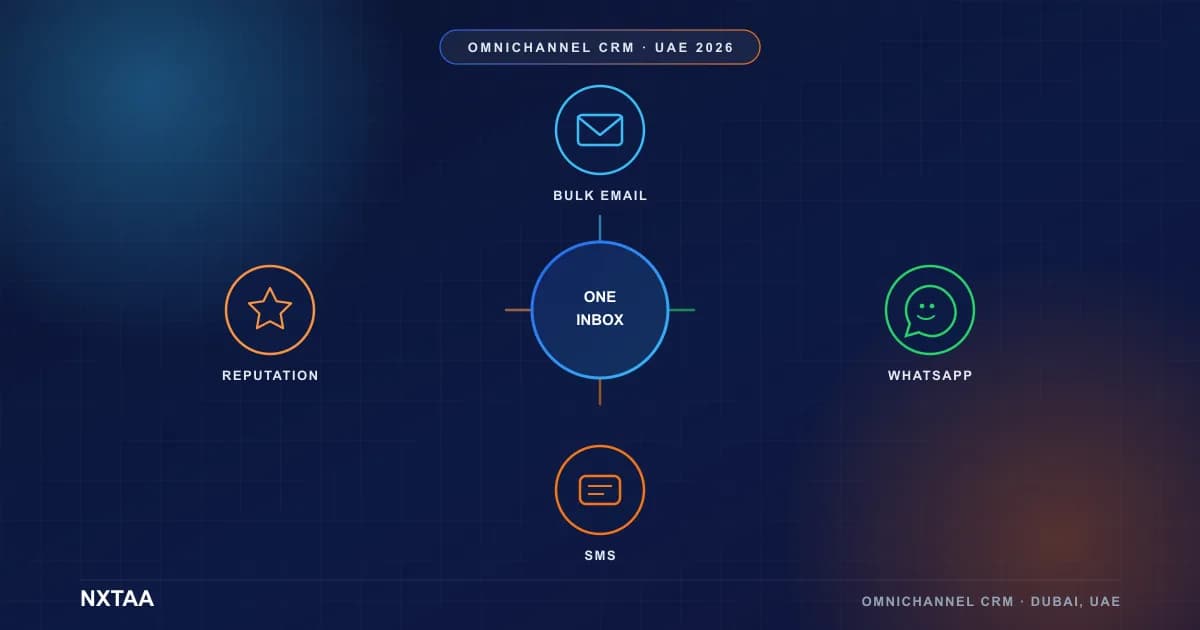
When you pair this with a CRM that records each stage, the business can finally answer the question it could not before: how many leads are open, and who has them. Our omnichannel CRM guide explains how channels and records connect, and our piece on generating high-quality leads in the UAE covers the sources feeding this workflow.
What Changed in Practice
The consultancy did not hire more people. It changed how existing people worked. Duplicate replies stopped, because only one name sat on each lead. Leads without a reply stopped, because the clock was visible. The manager could open the inbox and see everything open, who held it and how old it was.
The lesson reaches beyond business setup. Any firm that takes enquiries from many places and answers on WhatsApp, such as real estate agencies, immigration advisers, insurance brokers and training providers, has the same hole. Speed matters, but ownership matters first.
Workflow Checklist
- Choose one official WhatsApp number and retire personal numbers as lead channels
- Move to a shared inbox on the WhatsApp Business API
- Define three to five intake questions and the categories they create
- Write routing rules that assign exactly one owner
- Set reply and follow-up targets by lead type
- Add escalation by time to team lead and manager
- Record source, owner and outcome on every lead
- Review aging daily and the full pipeline weekly
How NXTAA Can Help
We design WhatsApp enquiry workflows for call-centre and service teams in the UAE:
- Official number setup, shared inbox and routing on the WhatsApp Business API
- Call-centre workflows, queues and escalation inside our contact center solutions
- Automated intake, assignment and follow-up reminders with marketing automation
Want every enquiry to have an owner? Contact NXTAA and we will walk you through a workflow built around your sources and your team.
You Might Also Like
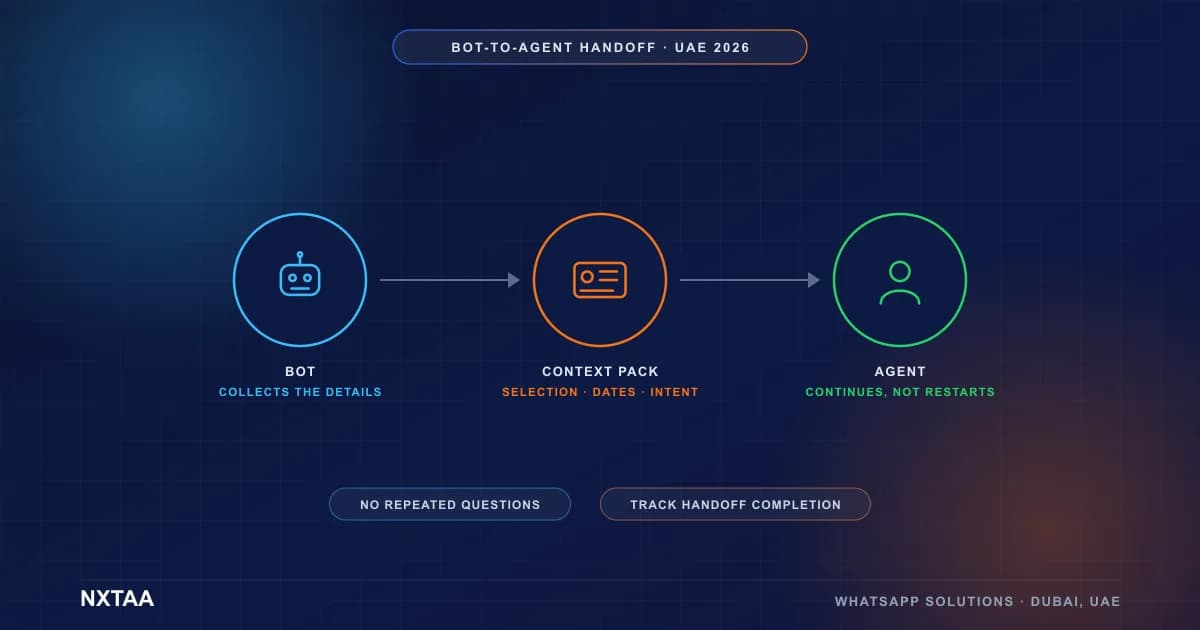
- Why Your WhatsApp Handoff Loses Customers at the Moment They're Ready to Book
- Shared Team Inbox vs Personal WhatsApp Phones
- How to Generate High-Quality Leads in the UAE
- Omnichannel CRM for UAE Businesses
FAQ
What is a WhatsApp enquiry workflow? It is a defined path every incoming lead follows: intake, classification, owner assignment, reply, follow-up and outcome. It makes sure no enquiry sits unanswered.
Why use one official WhatsApp number for leads? One number puts every conversation in a shared inbox the team and managers can see. Personal phones hide conversations and break when someone is away.
How should leads be assigned to owners? Use rules such as round-robin within a service line, specialty matching or the existing client relationship. Every lead gets exactly one named owner.
What should happen when a lead is not answered in time? Escalate automatically: first a nudge to the owner, then to the team lead, then to the manager. Escalation by time removes the need for someone to notice.
Can phone leads move onto WhatsApp properly? Yes. The agent starts the conversation from the official number with an approved template instead of using a personal phone, so the thread stays in the shared inbox.
Do I need a CRM for this? A shared inbox gets you most of the way. A CRM adds source tracking, stages and reporting, which matter once volume grows.
Is consent needed for automated first messages? Yes. Collect clear opt-in on forms and keep a record. Follow WhatsApp's policies and UAE rules on marketing messages.
Can WhatsApp assign chats automatically? Not by itself, because WhatsApp's own apps have no assignment rules. Automatic assignment comes from a shared inbox or CRM connected to the WhatsApp Business API, which applies rules such as round-robin or skill-based routing.