Omnichannel CRM for UAE Businesses: WhatsApp, Bulk Email, SMS & Reputation in One Inbox
NXTAA Team
Digital Communications Strategist
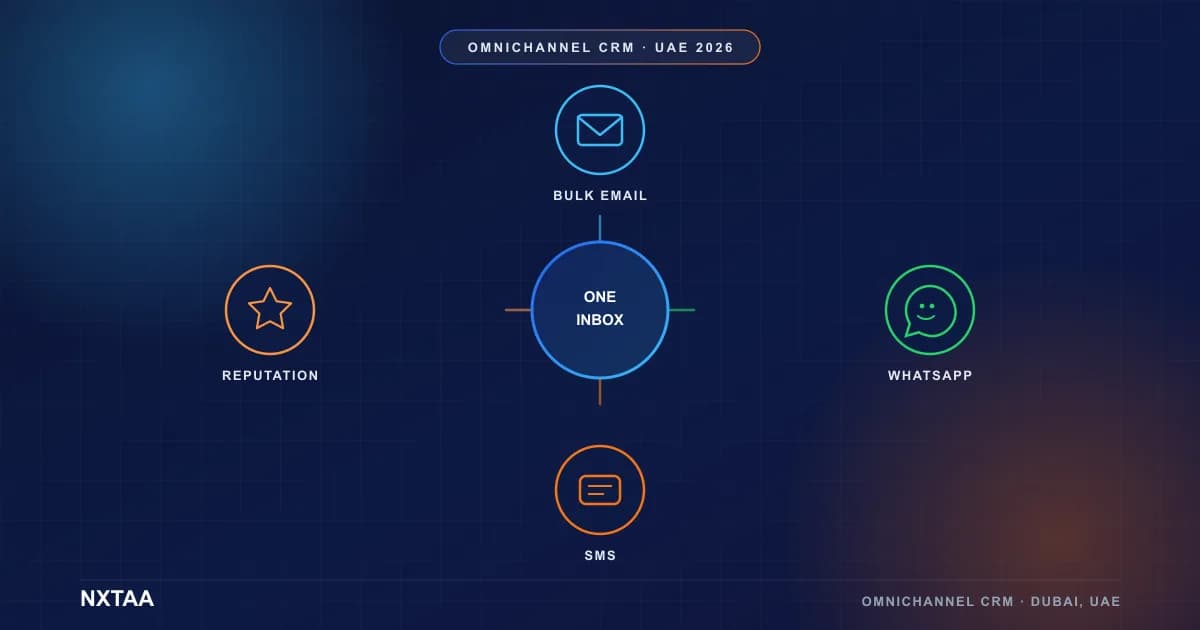
An omnichannel CRM for UAE businesses is a single platform that sends and receives WhatsApp, email, and SMS from one inbox while tracking every customer reply, order, and review under one contact record. It replaces four or five disconnected tools with one system your whole team can see.
Key Takeaways
- Most Dubai SMEs run WhatsApp, email, SMS, and Google Reviews as separate tools with zero shared data — that's the actual cost center, not the software fees
- An omnichannel CRM merges every channel into one contact timeline, so no agent replies to a customer without knowing what happened last week on a different channel
- WhatsApp Business API (WABA) is the anchor channel in the UAE — 98%+ open rates beat email and SMS by a wide margin, but it only works properly inside a CRM with proper template management
- Reputation management isn't a bolt-on feature; the businesses that win local search in Dubai are the ones replying to Google reviews within hours, not weeks
- TDRA compliance (opt-in consent, STOP handling, content restrictions) has to be built into the platform, not bolted on by an admin with a spreadsheet
- Switching costs less time than most owners expect — a proper migration runs two to three weeks, not months
The Problem Nobody Budgets For
Walk into almost any mid-sized company in Dubai — a real estate brokerage, a clinic, an e-commerce brand — and you'll find the same setup. WhatsApp Business app on someone's personal phone. A Mailchimp account nobody remembers the login for. An SMS gateway the ops manager set up two years ago and never touched again. Google Reviews checked manually, maybe once a week, if someone remembers.
Each tool works fine on its own. That's not the problem.
The problem shows up the moment a customer contacts you on two channels within the same week. Say a client messages your WhatsApp about a delayed shipment, then emails your support inbox three days later asking the same question because nobody replied. Two different staff members handle each message. Neither knows the other conversation happened. The customer now thinks your business doesn't talk to itself — because it doesn't.
I've watched this exact scenario play out at a Dubai furniture retailer that was losing repeat customers and couldn't figure out why. Support response times looked fine on paper. Turned out their WhatsApp team and their email team were answering the same tickets independently, sometimes with contradicting information, and customers were quietly switching to a competitor who just seemed more organized. Nothing was broken. Everything was just disconnected.
That's the real cost of running channels separately: not the subscription fees, but the fragmented customer experience and the hours your team burns cross-checking three apps before answering one message.
What "Omnichannel" Actually Means (And What It Doesn't)
Marketing teams throw "omnichannel" around loosely, so let's be precise about it.
Multichannel means you're present on WhatsApp, email, and SMS. Omnichannel means those channels share one data layer — one contact record, one conversation history, one view of what a customer bought, asked, or complained about, regardless of which channel they used to reach you.
The distinction matters because most businesses think they're already omnichannel simply because they use multiple apps. They're not. If your WhatsApp Business app and your email platform don't talk to each other, you're multichannel with extra steps.
A real omnichannel CRM does three things at once:
- Pulls WhatsApp, email, and SMS conversations into a single unified inbox agents can work from
- Attaches every message — inbound or outbound — to one persistent customer profile
- Lets automation and reporting run across all channels together, not per-channel in isolation
If a platform can't do all three, it's a messaging tool with a CRM label stuck on it.
WhatsApp Business API: The Channel Everything Else Should Orbit Around
In the UAE, WhatsApp isn't just another channel — it's the default one. Adoption here runs higher than almost anywhere else in the region, and open rates on WhatsApp messages routinely clear 98%, compared to roughly 20% for a good email campaign. When a customer needs to hear from you fast, WhatsApp is where they're already looking.
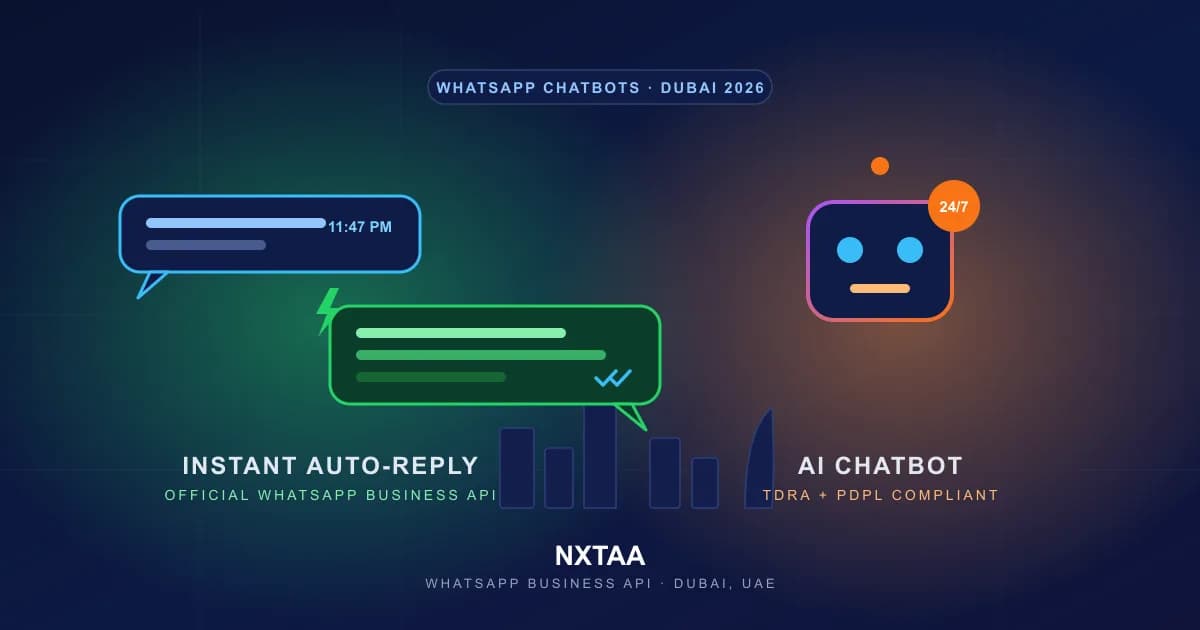
But there's a hard line between the free WhatsApp Business app and the WhatsApp Business API (WABA), and businesses that don't understand it get burned. The free app is fine for a single person answering messages on their own phone. It caps out fast — no team inbox, no automation, no way to send bulk messages without risking a ban. WABA is the paid, verified, Meta-approved infrastructure built for actual business volume: multiple agents, message templates, automated flows, and the throughput to send thousands of messages without triggering spam flags.
Here's the part that trips people up: WABA on its own is just an API. It needs a CRM wrapped around it to be usable. Without one, you're technically compliant but functionally back to one person manually reading messages — just now with extra infrastructure cost and no interface.
Inside a proper omnichannel CRM, WABA becomes:
- A shared team inbox where multiple agents pick up conversations without duplicating replies
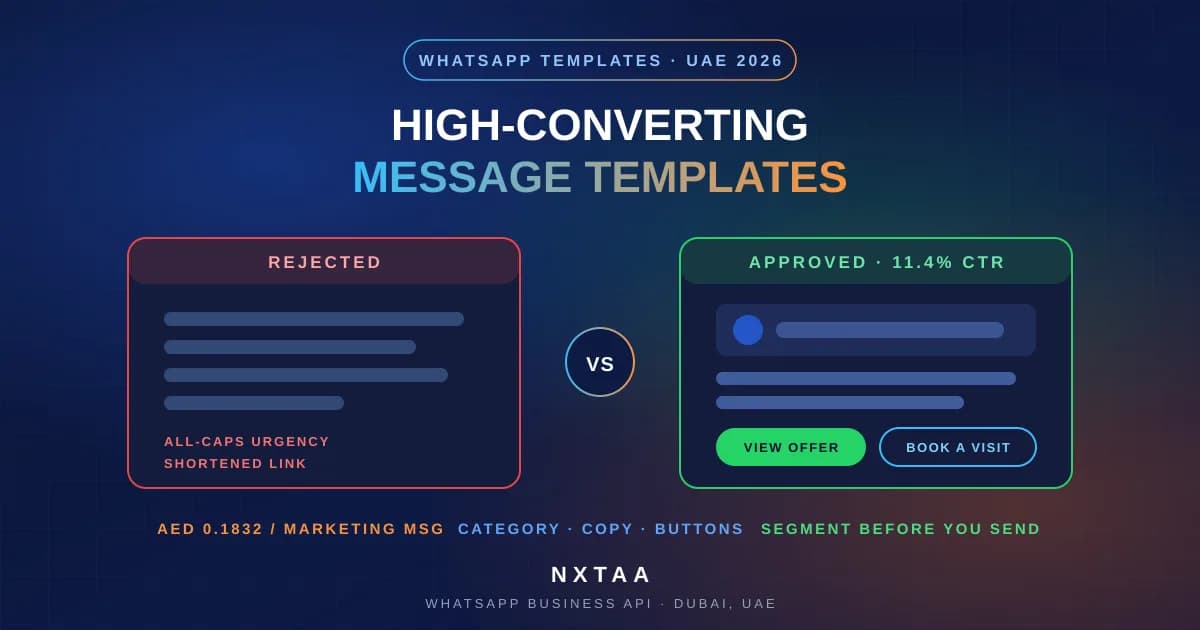
- Pre-approved message templates for order confirmations, appointment reminders, and delivery updates
- Automated flows that route a "where's my order" message to the right department instantly
- A conversation history tied to the same contact record your email and SMS teams see
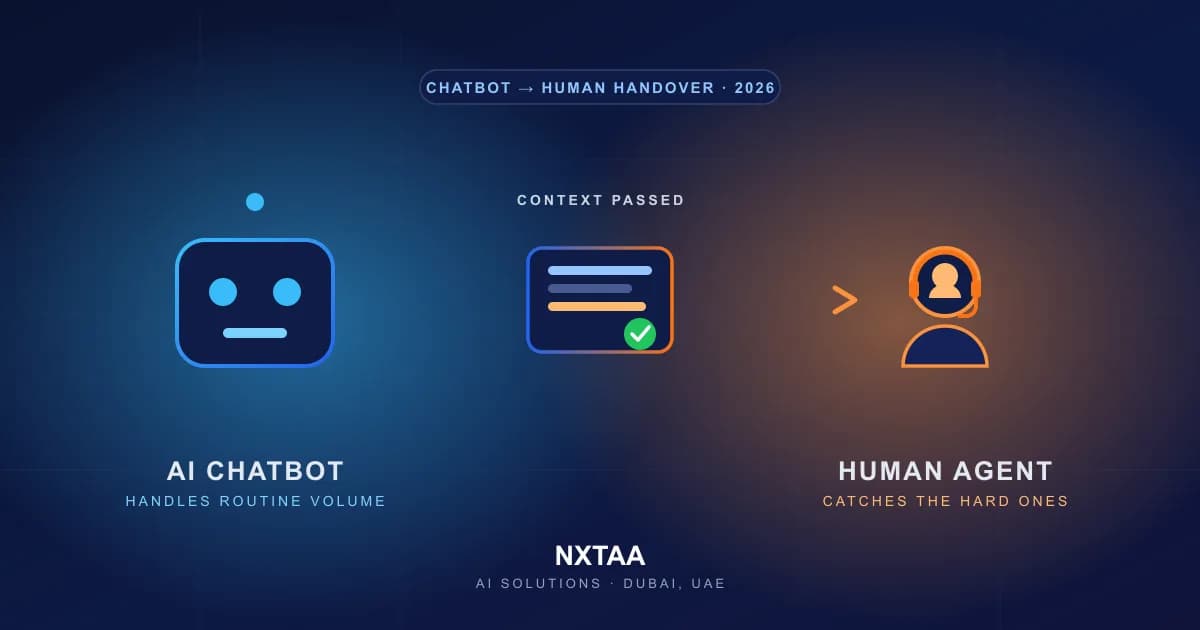
That last point is the one businesses underestimate the most. When your WhatsApp agent can see that a customer already emailed about the same issue, they stop asking the customer to repeat themselves — and that alone measurably improves resolution time.
Not sure whether your business needs the full API or the free app is still enough? Our WhatsApp Business API guide for UAE businesses walks through the exact volume threshold where switching pays for itself. If you're ready to move, NXTAA's WhatsApp Business API service handles verification, template approval, and CRM setup end-to-end.
Getting Verified Without the Headaches
Registering for WABA involves Meta Business Manager verification, a dedicated phone number, and document checks against your UAE trade license — and Meta's review process alone can take one to three weeks if your documentation isn't spotless. We've written a full walkthrough of this if you're starting from zero: how to register for WhatsApp Business API in the UAE. If your account has already been restricted or banned — which happens more often than businesses expect, usually from bulk-sending without proper opt-in — see our guide on recovering a banned WhatsApp Business account before you do anything else.
Bulk Email: Still Necessary, Just Not the Star Anymore
Email isn't dead in the UAE market. It's just been demoted from primary channel to supporting channel, and businesses that haven't made that mental shift keep over-investing in it.
Email still does things WhatsApp and SMS can't: detailed newsletters, invoices with attachments, long-form product catalogs, anything that needs formatting beyond a chat bubble. What it doesn't do well anymore is urgent, time-sensitive communication — open rates on cold or semi-cold email lists in the region average somewhere around 15-20%, and that's before you factor in how many land in a Promotions tab nobody checks.
Inside an omnichannel CRM, bulk email earns its place back by doing the job WhatsApp genuinely can't:
- Segmented campaigns based on purchase history or engagement — something that needs a real customer database, not a static list
- Automated sequences (welcome series, cart abandonment, re-engagement) triggered off the same contact record your WhatsApp team touches
- Deliverability tracking that feeds back into the same reporting dashboard as your other channels, instead of living in a separate Mailchimp tab
A retail brand we worked with was sending the exact same generic email blast to their entire 40,000-contact list every week, with unsubscribes climbing steadily. Once their email data connected to the same CRM tracking WhatsApp and purchase behavior, they could segment by actual buying pattern — and open rates on their targeted sends roughly doubled within the first two campaigns. Nothing about the email copy changed. The targeting did.
For the mechanics of building that kind of list properly — consent, hygiene, segmentation — see building an email marketing database in the UAE and our broader email marketing best practices guide.
SMS: The Fallback Channel That Still Converts
SMS gets treated as an afterthought by a lot of businesses, which is a mistake in a market where phone numbers are more reliably current than email addresses. If a WhatsApp message doesn't land — number not on WhatsApp, message filtered, user opted out of business messages — SMS is the fallback that still reaches almost everyone.
Where SMS earns its keep inside an omnichannel setup:
- OTPs and time-critical alerts where every second of delay matters
- Appointment reminders for clinics and service businesses, where a no-show costs real money
- A guaranteed-delivery backup when WhatsApp opt-in hasn't happened yet
The catch is the same one that trips up WhatsApp: TDRA regulations in the UAE are specific about consent, sender ID registration, and opt-out handling, and getting this wrong risks your sender ID getting blacklisted — which then breaks SMS for every campaign after, not just the one that violated the rules. Run through the requirements in our UAE SMS guidelines piece before sending anything at scale, and lean on NXTAA's enterprise SMS service if you'd rather not learn TDRA compliance by triggering an enforcement action.
Reputation Management: The Channel Most CRMs Forget
Here's a category most "omnichannel" platforms quietly skip: reviews and reputation.
A Dubai clinic can run flawless WhatsApp appointment reminders and still lose new patients because their Google Business Profile sits at 3.6 stars with eleven unanswered one-star reviews from 2025. Local search in the UAE — and Google's local ranking algorithm generally — weighs review volume, recency, and response rate heavily. A business that never responds to reviews doesn't just look inattentive. It actively ranks worse.
Reputation management inside a real omnichannel CRM does three things:
- Alerts you the moment a new review lands — on Google, and ideally other platforms too — so response time drops from days to hours
- Triggers review requests automatically after a completed order or appointment, timed while the experience is still fresh in the customer's mind
- Feeds review sentiment back into the same customer profile your support team sees, so a frustrated review isn't a surprise the next time that customer messages you
That third point is where reputation management stops being a separate function and becomes part of the same system as WhatsApp and email. If a customer left a two-star review complaining about slow delivery, and that same customer messages your WhatsApp inbox next month, your agent should see that history before replying — not find out about it from an angry follow-up.
Automating the review-request step alone tends to move the needle fastest. Businesses that ask systematically, right after a positive interaction, generally see review volume climb within the first couple of months — simply because most satisfied customers never think to leave a review unless prompted at the right moment.
Ready to stop chasing four different tools every week? Talk to NXTAA about an omnichannel CRM setup — we'll map your current channels, flag the compliance gaps, and give you a realistic migration timeline.
What to Actually Check Before You Buy
Vendor demos make every platform look identical. They're not. Before signing anything, verify these specifically:
Does it merge conversations into one contact, or just show multiple channels in separate tabs? Tab-switching between channels is multichannel wearing an omnichannel label. The real test: open a contact and see if their WhatsApp thread, email history, and SMS log sit on the same screen.
Is the WhatsApp integration official API access, or a workaround? Some cheaper platforms use unofficial WhatsApp connections that violate Meta's terms and can get your number banned without warning. Ask directly whether they're a verified Meta Business Solution Provider.
Does it handle TDRA opt-in/opt-out automatically, or is that manual? If STOP requests and consent tracking depend on someone remembering to update a spreadsheet, they will eventually forget, and that's a compliance exposure you don't want.
Can non-technical staff actually run it, or does every change need a developer? A CRM your marketing coordinator can't operate without escalating to IT isn't solving the problem — it's relocating it.
What does migration actually involve? Ask for a real timeline, not a sales answer. A competent migration of contacts, WhatsApp templates, and email lists should run two to three weeks for a mid-sized business, not the "it depends" non-answer some vendors give to avoid committing.
A Realistic Rollout Order
Don't try to migrate every channel simultaneously — that's how projects stall for three months and nobody uses any of it. A sequence that actually works in practice:
- WhatsApp Business API first. It's the highest-engagement channel and the one your team already relies on daily, so migrating it first delivers the most visible win fastest.
- Reputation management second. It's low-effort to set up and starts protecting your local search ranking immediately — every week without it is a week of unanswered reviews stacking up.
- SMS third, once your TDRA compliance and opt-in lists are clean.
- Bulk email last. It needs the most list hygiene work, so give it the runway the other three channels don't need.
Businesses that try to flip every switch on day one almost always end up under-using two of the four channels for months. Sequencing it lets your team actually build the habit of working from one inbox before adding the next layer of complexity.
How NXTAA Brings This Together
NXTAA runs the full omnichannel stack for UAE businesses — not as separate add-ons, but as one connected system:
- WhatsApp Business API setup and management — verification, template approval, and a shared team inbox, handled end-to-end through our WhatsApp Business API service
- TDRA-compliant bulk SMS and email, with opt-in/opt-out and consent tracking built into the platform rather than managed manually — see our enterprise SMS and email marketing services
- Unified contact records and automation across every channel through our marketing automation service, so no agent ever replies without the full picture
If your team is still juggling four apps to answer one customer, talk to NXTAA about an omnichannel CRM setup. We'll map your current channels, flag the compliance gaps, and give you a realistic migration timeline — no obligation.
You Might Also Like
- WhatsApp Business API in the UAE: 2026 Market Guide
- How to Register for WhatsApp Business API in the UAE
- How to Send Bulk WhatsApp Messages (Without Getting Banned)
- UAE SMS Guidelines: What Every Business Needs to Know
- How to Build an Email Marketing Database in the UAE
FAQ
What's the difference between a multichannel and an omnichannel CRM? Multichannel means you use several separate tools for WhatsApp, email, and SMS. Omnichannel means those channels share one contact record and conversation history, so any agent sees the full picture regardless of which channel a customer used.
Do I need WhatsApp Business API, or is the free app enough? The free app works for a single person handling low volume. Once you need multiple agents, automation, or bulk sending, you need the API — the free app isn't built for team use and risks a ban at higher volumes.
How long does migrating to an omnichannel CRM actually take? A competent migration of contacts, WhatsApp templates, and email lists typically runs two to three weeks for a mid-sized UAE business. Longer timelines usually mean the vendor is being vague, not that the job genuinely requires more time.
Is reputation management really part of a CRM, or a separate tool? It should live inside the same system. Review sentiment needs to reach the same customer profile your support team sees, otherwise you're reacting to an angry customer with no context on why they're upset.
What UAE-specific compliance rules apply to bulk messaging? TDRA requires explicit opt-in consent before marketing messages, a clear opt-out mechanism (like "Reply STOP"), and restrictions on prohibited content categories. Both SMS and WhatsApp marketing fall under these rules.
Can a small business realistically afford an omnichannel CRM? Most platforms price per contact or per agent seat, which scales down for smaller teams. The bigger cost most small businesses underestimate isn't the subscription — it's the staff hours lost to manually cross-checking multiple disconnected apps.
Will switching CRMs mean losing my WhatsApp message history? A proper migration preserves your existing WhatsApp Business API number, templates, and message history — you're moving the interface on top of it, not starting the underlying account over.