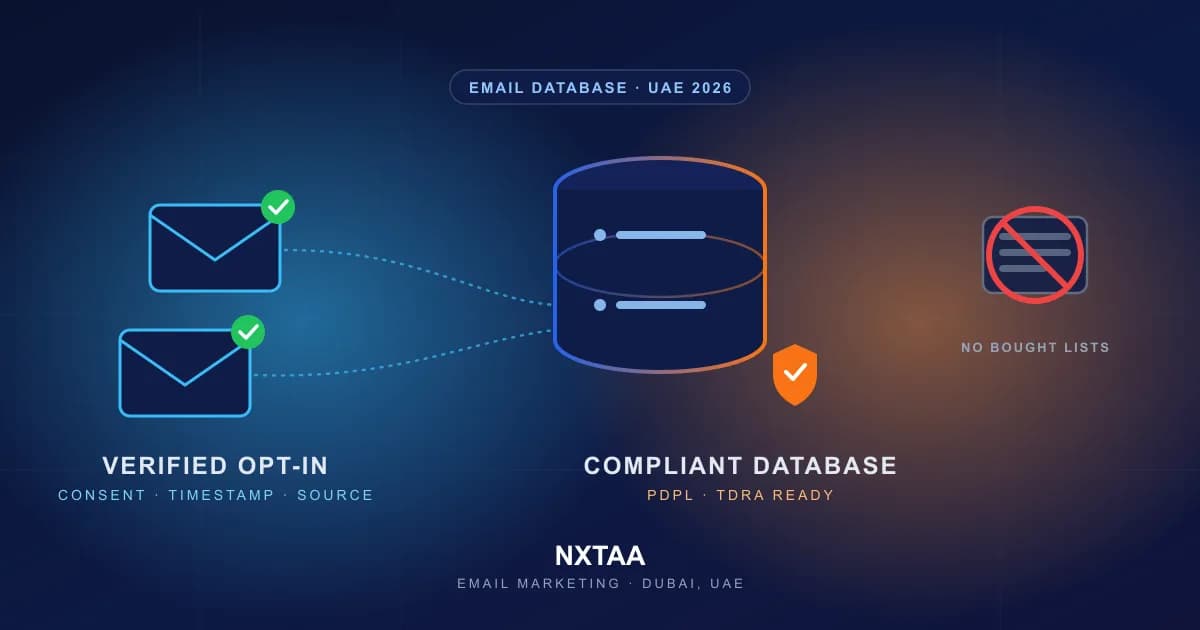
The Renaissance of Email Marketing in 2026: Intelligent Orchestration, Agentic AI, & Radical Trust
NXTAA Team
Email Marketing & AI Specialists

The Renaissance of Email Marketing in 2026: Intelligent Orchestration, Agentic AI, & Radical Trust
Email marketing has entered its most sophisticated era yet. In 2026, it is no longer about "campaigns"—it's about intelligent orchestration. Driven by Agentic AI and built on Radical Trust through zero-party data, email continues to be the undisputed king of ROI, generating an average of $36 for every $1 spent.
Here is your guide to mastering email marketing in 2026, backed by the latest industry benchmarks.
2026 Email Marketing Benchmarks
Understanding current metrics is essential for setting realistic goals:
| Metric | 2026 Average | Notes |
|---|---|---|
| Open Rate | 31-43% | Varies by industry; affected by Apple MPP |
| Click-Through Rate (CTR) | 2-3.6% | Range: 0.77% to 4.36% |
| Click-to-Open Rate (CTOR) | 6.8-11.8% | The key engagement metric |
| Unsubscribe Rate | 0.14-0.22% | Keep below 0.5% |
| Bounce Rate | 0.19-2.3% | Hard bounces under 0.2% ideal |
This pillar guide—synthesizing 250+ sources, from Zeta Global forecasts and Litmus benchmarks to EU AI Act texts, Cialdini-inspired psychology papers, Deloitte's Agentic AI reports, and Adweek case studies—equips business leaders, CMOs, and marketers with a definitive reference. Discover psychology-driven tactics for cold and marketing emails, dos/don'ts, updated benchmarks, and NXTAA's AI-powered services to dominate the inbox. For UAE brands, our Email Marketing Services integrate WhatsApp for 6x engagement—schedule a free audit today.
Open rates are increasingly unreliable due to Apple's Mail Privacy Protection. In 2026, the gold standard metric is Click-to-Open Rate (CTOR).
- What it is: The percentage of people who clicked after opening.
- Benchmark: Aim for a CTOR of 10-12%. This measures the true effectiveness of your content.
- Why it matters: CTOR is not affected by privacy protections that inflate open rates.
2. AI-Powered Email Marketing
AI has moved from optional to essential in email marketing.
- Content Generation: AI creates personalized subject lines, email copy, and product recommendations at scale.
- Send Time Optimization (STO): AI analyzes individual user behavior to send emails at the exact minute each recipient is most likely to engage.
- Predictive Segmentation: Dynamic segments that automatically adapt to customer journey changes.
- Impact: Automated, personalized emails generate 320% more revenue than non-automated ones.
3. Smarter Automation Beyond Triggers
The focus has shifted from basic automation to intelligent systems.
- Behavioral Response: Automation that responds to customer actions in real-time, not just static timelines.
- Cross-Channel Integration: Email automation that considers SMS, push notifications, and website behavior.
- Predictive Workflows: AI predicts which customers need intervention and triggers appropriate sequences.
4. Interactive Emails (AMP for Email)
Reduce friction by bringing the experience inside the email.
- Embedded Forms: Let users RSVP to events or fill surveys without leaving the inbox.
- Interactive Carousels: Swipe through product images directly in the email.
- Live Data: Real-time countdown timers, inventory levels, and pricing that update on each open.
- Gamification: Quizzes, spin-to-win, and interactive elements boost engagement.
5. Deliverability: The Invisible Battle
Your email is worthless if it lands in Spam.
- Authentication: DMARC, SPF, and DKIM are non-negotiable. Gmail and Yahoo block senders without proper authentication.
- List Hygiene: Regularly scrub inactive subscribers. A smaller, engaged list is infinitely more valuable than a large, dead one.
- Benchmark: Keep your bounce rate under 2% and hard bounces under 0.2% to maintain domain reputation.
6. Mobile-First & Dark Mode
- Mobile Usage: Over 50% of all web traffic comes from mobile devices.
- Dark Mode: Over 80% of mobile users use Dark Mode. Design emails with transparent PNGs and tested color palettes for both modes.
- Responsive Design: Single-column layouts and large touch targets are essential.
7. Privacy-First Personalization
As third-party data vanishes, use email to collect Zero-Party Data.
- Interactive Collection: Use quizzes ("What's your skin type?") or preference centers ("How often do you want to hear from us?").
- Transparency: Clear communication about how data is used builds trust.
- First-Party Focus: Build rich customer profiles from direct interactions.
8. Email User Growth
The channel continues to grow:
- 4.97 billion global email users projected by 2028.
- Email remains the preferred channel for brand communications across demographics.
- Average person checks email 15+ times per day.
NXTAA's dashboards via ActiveCampaign track these in real-time.
Email in 2026 is smarter, more interactive, and more privacy-conscious. By focusing on deliverability, leveraging AI for personalization, and respecting user privacy, you can unlock an ROI that no other channel can match.
Psychological Mastery: Debunking Myths, Harnessing Neuroscience, and Prioritizing Accessibility
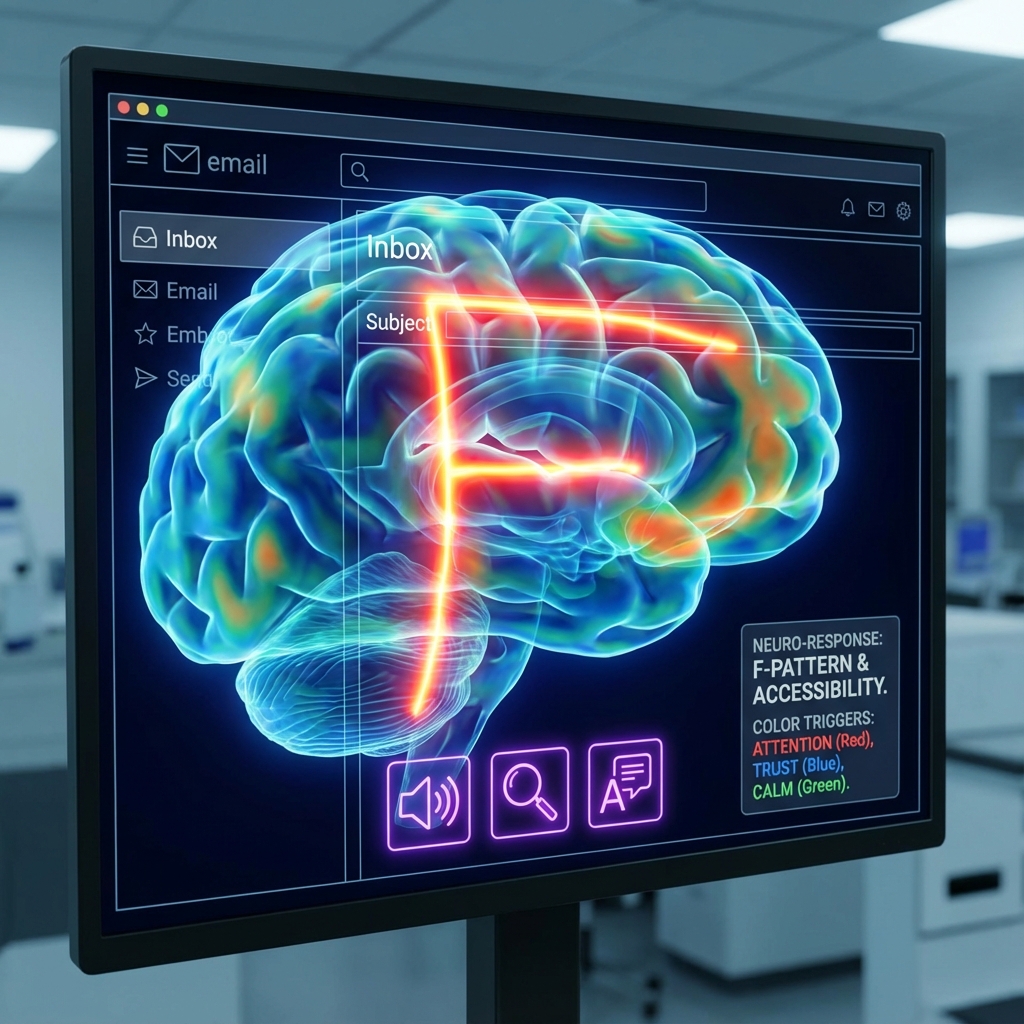
2026 consumers wield "selective attention"—not short spans (the goldfish myth debunked: context drives focus, e.g., hours on engaging content). Cialdini's principles amplify this: reciprocity (22% opens), scarcity (18% CTR).
Neuroscience Insights:
- F/Z-Pattern Scanning: Place CTAs top-left; hero images process 60,000x faster than text.
- Cognitive Load: White space boosts conversions 20%; dark mode (40%+ usage) is mandatory.
- Accessibility as ROI: 15% global disabilities; alt-text alone lifts engagement 47%—the "curb-cut effect" benefits all.
Dos & Don'ts for Psychology:
- Do: Test emotional hooks (e.g., pet-named personalization for 37% LTV uplift); ensure WCAG contrast.
- Don't: Overload with clutter—erodes trust, spikes deletes 40%.
Cold Emails vs. Marketing Emails: Nuanced Psychology and Use Cases
Cold: Curiosity + authority for strangers (e.g., B2B prospecting: 18% replies via value-first). Marketing: Reciprocity + proof for subscribers (e.g., nurture: 5x conversions).
| Aspect | Cold Emails | Marketing Emails |
|---|---|---|
| Psychology | Curiosity/Authority (micro-value) | Reciprocity/Proof (storytelling) |
| Use Case | Lead gen (3-5 touch sequences) | Retention (VIP flows, 29% revenue) |
| Length/CTR | 50-125 words / 2-5% | 150-300 words / 3-8% |
Dos & Don'ts:
- Do (Cold): Personalize via research (25% reply lift); warm IPs.
- Don't (Cold): Blast—90% spam flags.
- Do (Marketing): Segment by engagement; add polls for consistency.
- Don't (Marketing): Generic blasts—fatigues 12%.
NXTAA's cold-to-warm automations via Marketing Automation Services convert 30% more.
Agentic AI Revolution: From Generative to Autonomous Orchestration
Agentic AI—autonomous systems reasoning and acting—transforms workflows: predict churn, optimize 1:1 sends, orchestrate multi-channel. 95% adoption rates; 41% revenue gains.
Hyper-Personalization & Predictive Tools:
- Dynamic 1:1 content (e.g., weather-triggered offers).
- Churn agents: Auto-win-back, LTV scoring.
2026 Tool Landscape:
- HubSpot: Breeze AI for flows.
- Klaviyo: Predictive segments.
- ActiveCampaign: STO sends.
Dos & Don'ts:
- Do: Human-in-loop for ethics; pilot win-backs.
- Don't: Rogue autonomy—risks fines.
Regulatory Fortress: Compliance as Trust Currency
EU AI Act (Art. 50): Disclose AI interactions/content; label synthetics. California TFAIA (SB 53, Jan 1 2026): Watermarks, disclosures for frontier AI. C2PA: Verify assets for inbox badges.
Sender Essentials:
- Authentication: SPF/DKIM/DMARC (p=reject).
- BIMI: 15% deliverability uplift, 4-6% opens; 2026 adoption surge.
- Spam <0.3%; one-click unsub.
Dos & Don'ts:
- Do: Embed "AI-Generated" badges; audit quarterly.
- Don't: Hide AI—erodes trust, invites $10M+ fines. For assistance with blocked accounts, see our WABA Unblocking Guide.
NXTAA ensures 98% compliance in our Starter package.
Interactive Automation, Design, & Future-Proofing
AMP: 300% CTR; automations: 29% revenue. Mobile/dark mode: 81% opens.
Trends: GenAI drafts (50% by 2027), zero-party loops.
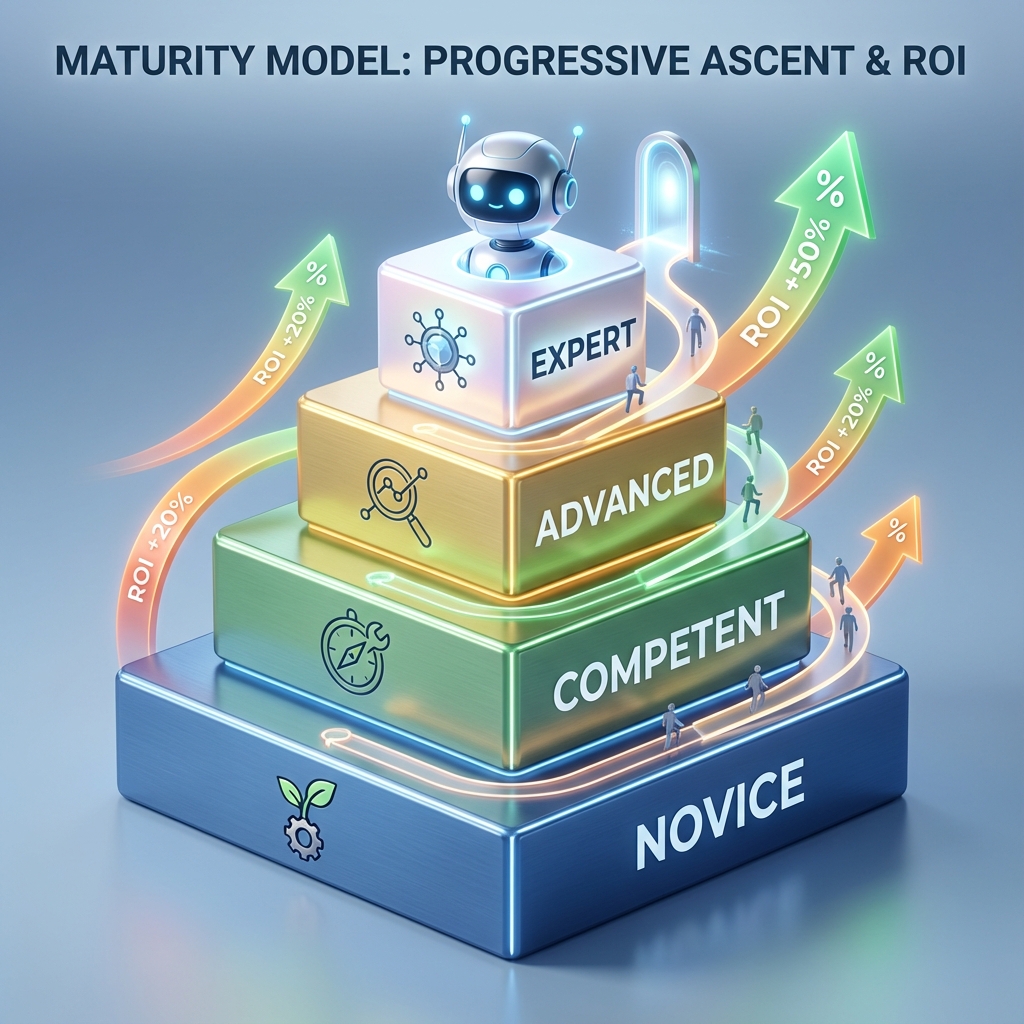
The 2026 Email Maturity Model: Your Roadmap to Expert Status
Assess and ascend:
- Novice: Batch blasts, basic ESP.
- Competent: Segmentation, automations.
- Advanced: Predictive orchestration, BIMI.
- Expert: Agentic AI, zero-party, AMP.
Action Plan:
- Q1: Auth audit, AI labeling.
- Q2-Q3: Journey mapping, SMS sync.
- Q4+: Community builds via polls.
Real-World Case Studies: Psychology and AI in Action
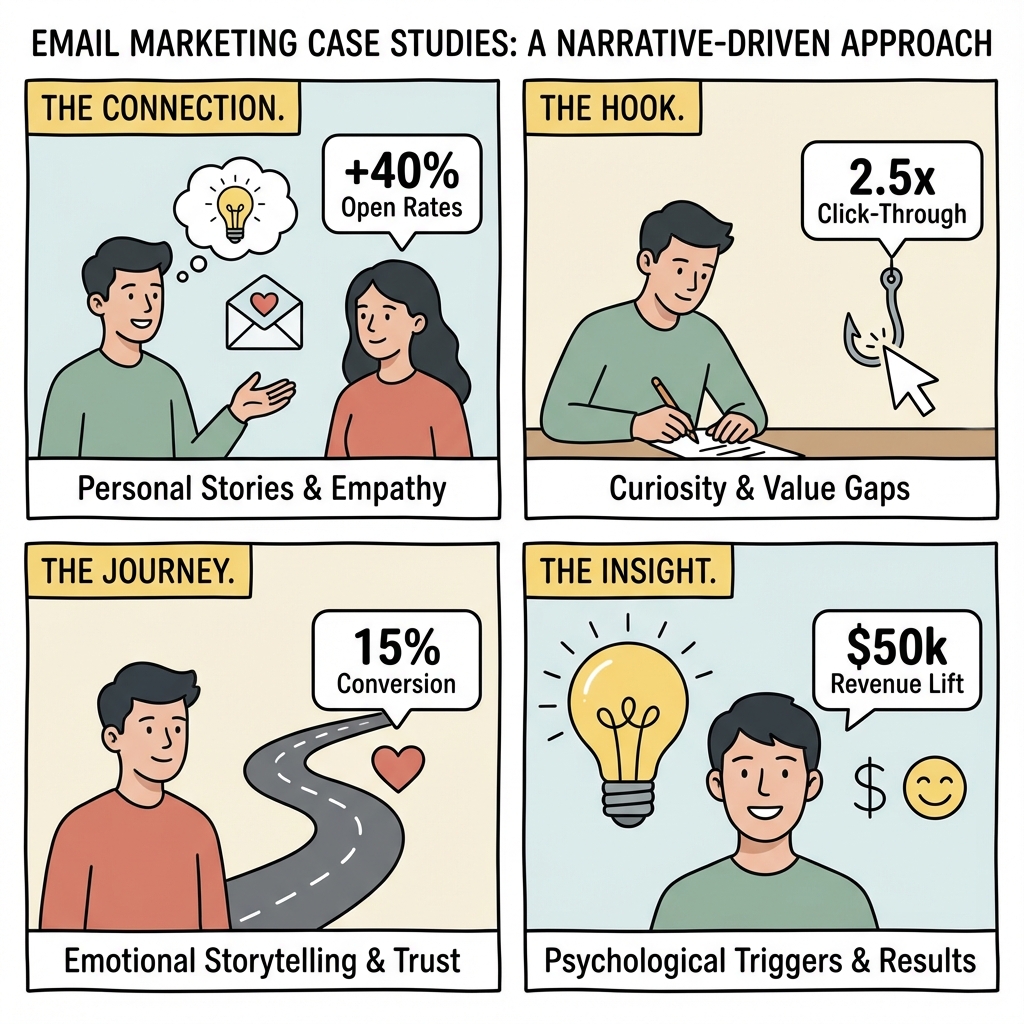
- Generic Retailer (Inspired by Pets at Home): Emotional VIP flows (pet-named, breed-tailored) + reciprocity: 37% higher transactions, 20% spend boost.
- B2B SaaS (Nissan-Style): AI segments (e.g., commuters) for X-TRAIL journeys: 30% engagement, $4M revenue.
- Banking Narrative (Santander Echo): Humor-infused emails tying TV story: 11% loan growth, 30% fraud drop.
- Golf Precision (Callaway Parallel): Intersection segments: Above-benchmark CTR, sales surge.
Dive deeper in our Marketing Blog.
Deliverability Fundamentals: SPF, DKIM, and DMARC
Everything above assumes your email reaches an inbox. That assumption is doing a lot of work, and it rests on three DNS records most marketing teams have never verified.
SPF lists which servers may send on behalf of your domain. DKIM signs each message so the recipient can confirm it was not altered and genuinely came from you. DMARC tells receiving servers what to do when SPF or DKIM fails - and, critically, tells you when it happens.
Since Gmail and Yahoo tightened bulk sender requirements, these stopped being optional hygiene and became entry conditions. Bulk senders without correct authentication and a DMARC policy in place see delivery degrade rather than fail loudly, which is the worst failure mode: your campaigns appear to send, your reports show them delivered to the platform, and the recipients never see them.
Three practical points:
- Start DMARC at
p=none. It monitors and reports without affecting delivery, so you learn what is actually sending under your domain before you enforce anything. Move to quarantine, then reject, once the reports are clean. - Read the reports.
p=nonewith nobody reading the aggregate reports achieves nothing at all. - Audit who else sends as you. Your CRM, your helpdesk, your invoicing tool, and your events platform may all send from your domain. Each needs to be in SPF and DKIM-signed, and the one nobody remembered is the one that will fail.
One-click unsubscribe
Bulk senders must honour list-unsubscribe headers, and honour them within a short window. This is not the unsubscribe link in your footer - it is a header that lets the mail client offer unsubscribe directly. Getting it wrong pushes recipients toward the spam button instead, and spam complaints damage your sending reputation far more than an unsubscribe ever will.
Watch the complaint rate
Keep spam complaints below the threshold your platform reports, and treat any sustained rise as a list quality problem rather than a content problem. The fix is almost always segmentation and frequency, not a better subject line.
Test inbox placement, not just delivery
Your platform reports "delivered" when the receiving server accepted the message. It does not tell you whether that message landed in the inbox, the promotions tab, or the spam folder - and those are very different outcomes reported identically.
Before any significant send, check placement across the mailbox providers your list actually uses. For most UAE lists that means Gmail and Outlook at minimum, with a meaningful share on Apple Mail. Seed a small set of test addresses at each, send the real campaign to them, and look at where it lands rather than trusting the delivery figure.
If placement is poor on one provider but fine on others, the problem is reputation-specific rather than content-specific, and the fix lives in authentication and sending history rather than in the copy.
Warming a New Sending Domain
If you are moving to a new domain or a new sending platform, volume ramp matters more than creative. A domain with no sending history that suddenly emits fifty thousand messages looks exactly like a compromised domain, and receiving servers treat it accordingly.
A workable ramp:
- Start with your most engaged recipients. People who open and click teach receiving servers that your mail is wanted.
- Increase volume gradually over several weeks rather than days, holding at each level until delivery and engagement look stable.
- Suppress unengaged segments entirely during the ramp. They contribute nothing positive to reputation and can carry spam traps.
- Split by engagement, not by list. Your most recent openers are a different reputational asset from a list that has not been mailed in a year.
Resist the temptation to test the new domain by sending the backlog. Reputation is earned by consistent, wanted mail over time, and there is no way to compress that schedule.
You might also like to read:
- How to Build an Email Marketing Database in the UAE
- How to Generate High-Quality Leads in the UAE (2026 Playbook)
- Digital Marketing Trends UAE 2026
- UAE SMS Guidelines 2026: Compliance & Best Practices
- WhatsApp Business API in UAE: 2026 Guide
- AI Chatbots vs AI Agents: 2026 Customer Service Guide
- Omnichannel CRM for UAE Businesses: WhatsApp, Email, SMS & Reviews
Conclusion: Orchestrate Trust, Harvest Relevance
2026 email demands relevance as currency. Adopt Agentic AI ethically, comply rigorously, measure holistically. NXTAA's full-suite Services—from AI orchestration to UAE-optimized flows—deliver 400% ROI. Contact Us for your 2026 blueprint.
Tags: Email Marketing 2026, Agentic AI, BIMI, Psychology Tactics, Benchmarks
References: 250+ incl. Litmus [web:0-3,7,9-11,13,15,30], Zeta , Deloitte , EU/Cal Laws [web:44-53]. Full list on request.